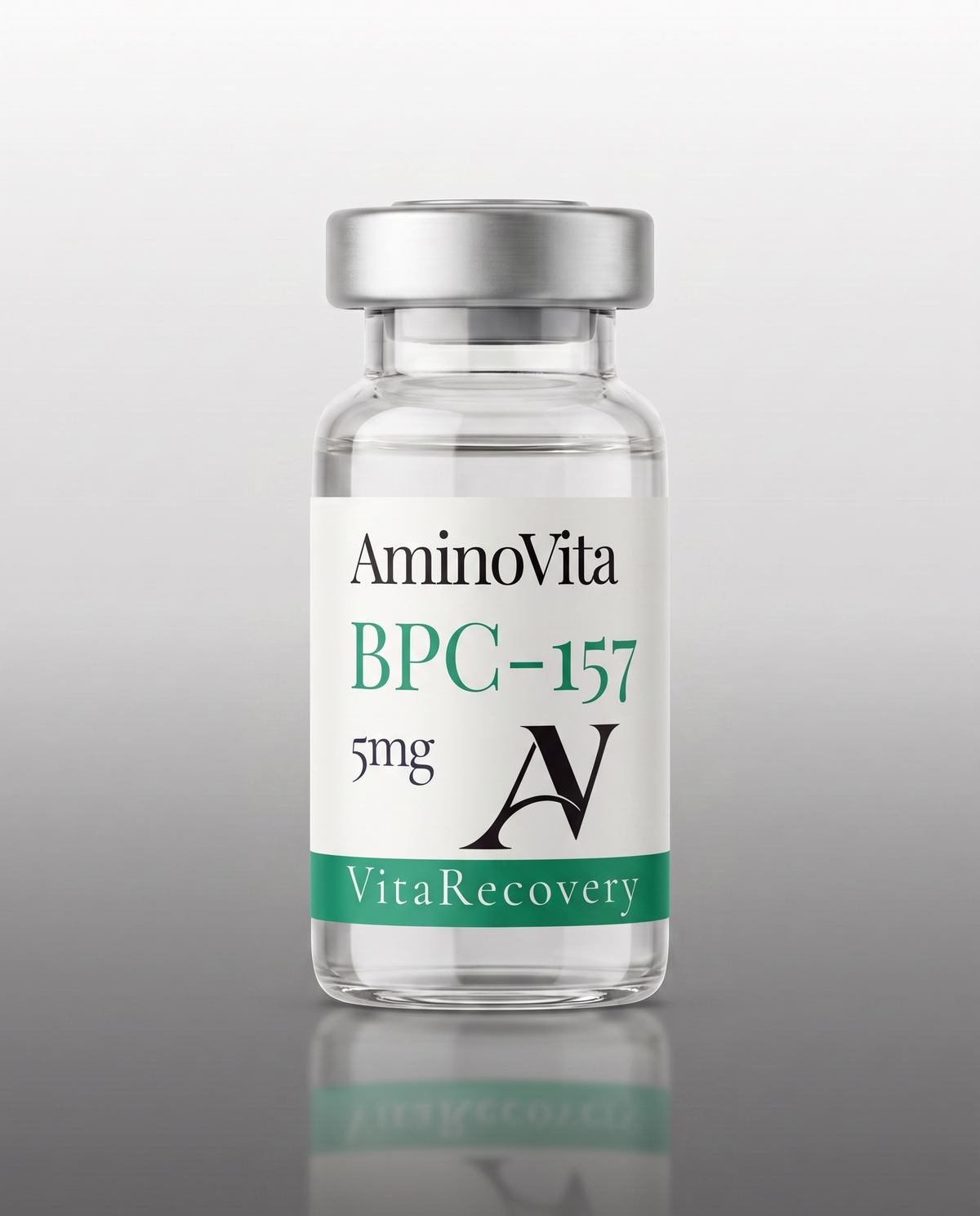
Available for Purchase
BPC-157 10mg
99%+ HPLC-verified · MS-confirmed · Batch-specific COA
$85.00
View ProductPentadecapeptide from gastric juice.
A 15-amino-acid fragment originally isolated from Body Protection Compound, a protein present in human gastric juice. Studied in in-vitro and animal models for its role in tissue-repair signaling.
Molecular Weight
1,419.53 Da
CAS Number
137525-51-0
Amino Acids
15 residues
Background
Body Protection Compound (BPC) was first identified in human gastric juice. Researchers isolated a stable 15-amino-acid fragment — BPC-157 — and began characterizing it as a candidate mediator of gastric mucosal defense.
Interest expanded when the same peptide appeared in tendon, ligament, muscle, and vascular repair models. Its mechanisms converge on universal tissue-repair processes: angiogenesis, growth factor signaling, and nitric oxide modulation.
BPC-157 is notable for its stability. Most peptides degrade rapidly in the gastric environment; BPC-157 remains active there — a property consistent with its endogenous origin and part of why it remains a frequent subject of published research.
Mechanism
Studied for its ability to promote vascular growth via VEGF signaling. Vascularization is a rate-limiting step in most tissue-repair processes; investigators have observed the effect across gut, tendon, and muscle models.
Interacts with nitric oxide pathway components implicated in vascular tone and inflammatory regulation. In cell-culture and animal studies, the peptide has been characterized as an NO-system modulator.
Investigated in relation to EGF, FGF, and VEGF pathway components — the signaling axes cells use to proliferate, migrate, and rebuild extracellular structure at injury sites.
Research Areas
Gastric Protection
Multiple animal studies characterize BPC-157 as gastroprotective against NSAID-, ethanol-, and stress-induced mucosal injury — consistent with its endogenous origin in gastric juice.
Read the mechanism deep-dive →Tendon & Ligament
In transected Achilles-tendon models, investigators have reported accelerated healing timelines and improved collagen-fiber alignment relative to control — endpoints assessed histologically and biomechanically.
Vascular Repair
Studied for its role in vessel formation and re-anastomosis in severed-vessel and ischemia models. Angiogenesis is thought to underlie many of the broader repair phenotypes attributed to the peptide in the literature.
Gut–Brain Axis
Animal work has examined BPC-157 in the context of dopaminergic and serotonergic pathway modulation. Findings are preliminary — investigators have flagged them as generating hypotheses for further study.
Available for Purchase
99%+ HPLC-verified · MS-confirmed · Batch-specific COA
$85.00
View ProductFurther Reading
Companion Compound
Frequently studied alongside BPC-157 for complementary roles in tissue repair — actin regulation and cell migration paired with BPC's angiogenic and growth-factor pathways.
Matrix Remodeling
A copper-binding tripeptide characterized for extracellular-matrix remodeling and collagen-synthesis signaling — a different repair axis from BPC-157.
FAQ
BPC-157 is a synthetic 15-residue fragment of Body Protection Compound, a protein present in human gastric juice. The research material is chemically synthesized — it is not extracted from human tissue.
Its investigated mechanisms — angiogenesis, NO-system modulation, and growth-factor signaling — are conserved repair pathways relevant to gut, tendon, ligament, muscle, and vascular tissue.
Its stability in gastric fluid. Most peptides degrade quickly in the acidic GI environment; BPC-157 remains active there — consistent with its endogenous origin.
The parent protein (Body Protection Compound) occurs naturally in gastric juice. The 15-residue fragment used in research is produced synthetically for consistency and analytical purity.
Complementary mechanisms. BPC-157 is studied for angiogenesis and growth-factor signaling; TB-500 is studied for actin regulation and cell migration — together they cover distinct steps in a repair cascade.
Browse the full research catalog — each compound ships with a batch-specific Certificate of Analysis.
Browse the Catalog